Damaraland and Kaokoland reveal Namibia at its most elemental. Granite mountains, dry riverbeds, open gravel plains and red sandstone formations stretch across a region where settlements are few and horizons feel limitless. This is a landscape to travel through slowly. Its rewards are not only headline sights, but also the changing geology, desert-adapted wildlife, cultural encounters and profound quiet between destinations.
Damaraland is generally more accessible and includes Twyfelfontein, Brandberg, Spitzkoppe and several excellent conservancy lodges. Kaokoland, extending into the far northwest, is rougher and more remote, with Epupa Falls, the Hoanib and Hartmann valleys and communities maintaining strong Himba traditions. Route difficulty varies widely; some journeys suit a standard high-clearance vehicle, while others require experienced 4×4 travel.
Highlights worth building into your route
- Twyfelfontein: discover one of Africa’s most important concentrations of ancient rock engravings with a local guide.
- Desert-adapted elephants: track free-roaming herds in ephemeral river systems with guides who understand their movements and conservation context.
- Brandberg and Spitzkoppe: walk among monumental granite scenery, rock shelters and dramatic sunset viewpoints.
- Community conservancies: stay in places where tourism supports local livelihoods and wildlife protection.
- Epupa Falls and the far northwest: experience a remote Kunene River oasis on a carefully planned extension.
How long do you need?
Allow at least two or three nights for Damaraland, ideally split between different parts of the region. A meaningful Kaokoland journey needs more time—often four nights or longer—because distances, road conditions and the value of guided exploration make rushing counterproductive. It is important to distinguish between an accessible lodge itinerary and a technical off-road expedition.
When to visit
The dry season is popular for wildlife tracking and predictable roads. Days are generally clear, while winter nights can be surprisingly cold. Summer brings heat and the possibility of localised rain, which can affect river crossings and remote tracks. Desert elephant sightings are never guaranteed; these animals range over large areas and ethical operators avoid pressuring them.
Planning accommodation and transport
Choose lodges based on location, activities and route logic rather than star rating alone. A beautiful property can still create an exhausting driving day if it sits on the wrong side of a mountain range. Fuel, food, water and reliable communications deserve extra attention in the far northwest. Travel 2 Namibia can connect the coast, Damaraland, Etosha and Kaokoland into a practical route, with suitable vehicles and accommodation reserved before you enter the most remote areas.
Our Damaraland & Kaokoland Selection
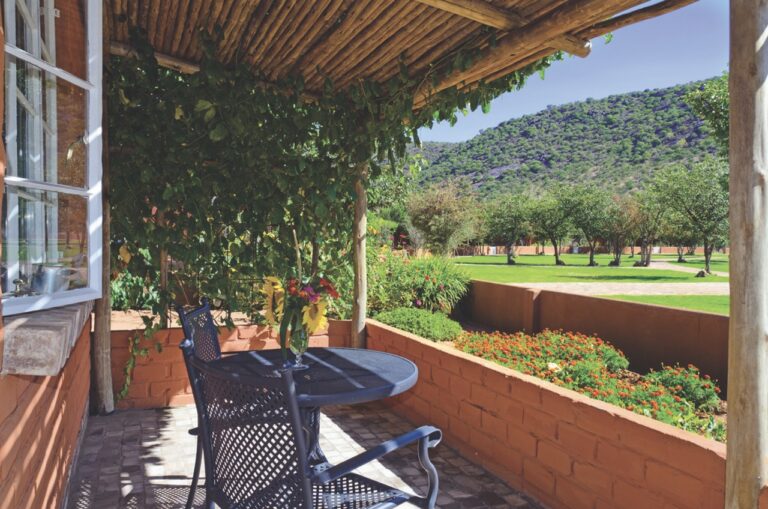
Damara Mopane Lodge
Stay at Damara Mopane Lodge near Khorixas, with garden chalets, a swimming pool and guided access to Twyfelfontein and Damaraland wildlife.
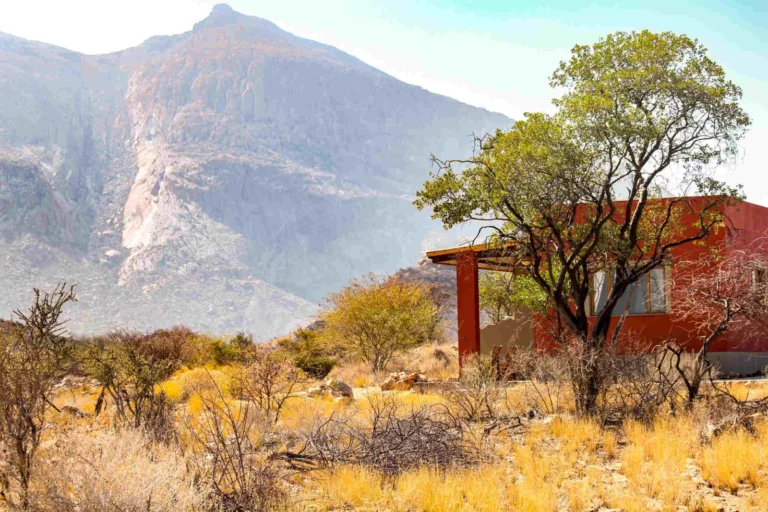
Hohenstein Lodge
Hohenstein Lodge near Usakos offers 14 rooms, mountain views, dining, a pool and access to Erongo walks, drives and Spitzkoppe.
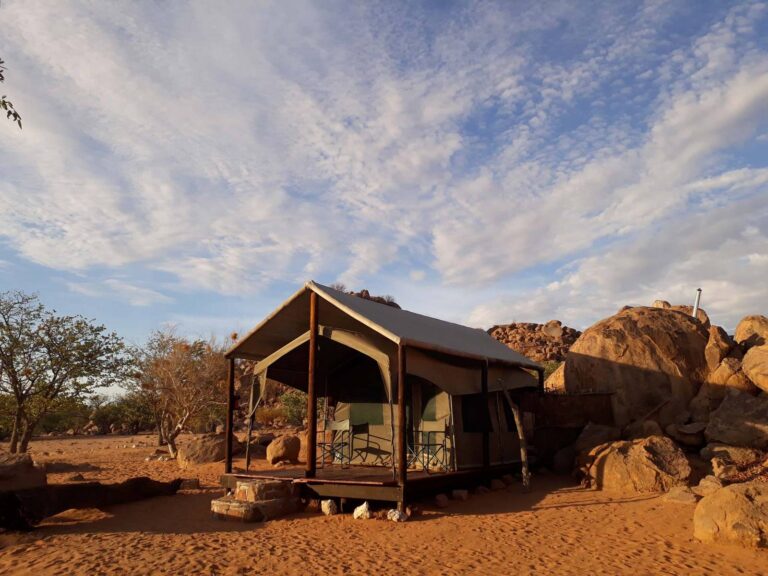
Madisa Camp
Madisa Camp offers private campsites and eco-friendly safari tents among granite boulders in Damaraland, with a pool and guided activities.
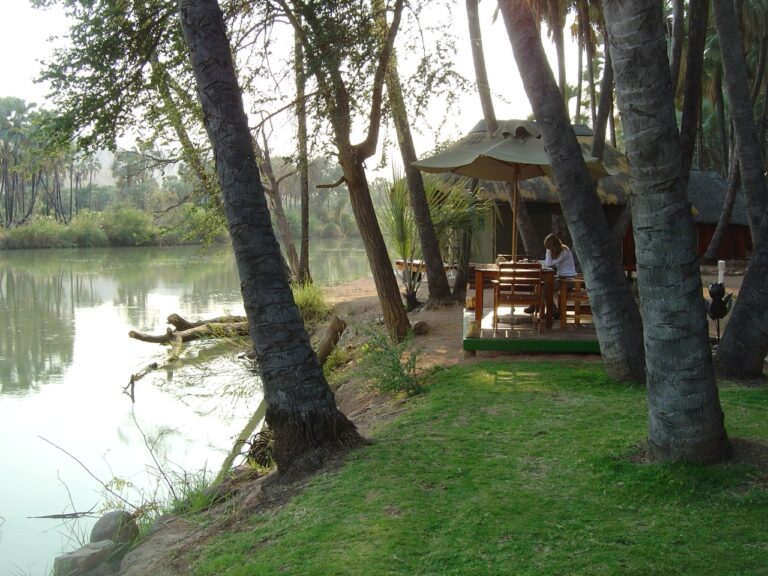
Omarunga Epupa-Falls Camp
Stay at Omarunga Epupa-Falls Camp on the Kunene River, with rooms, campsites, a pool, river walks and cultural experiences near Epupa Falls.
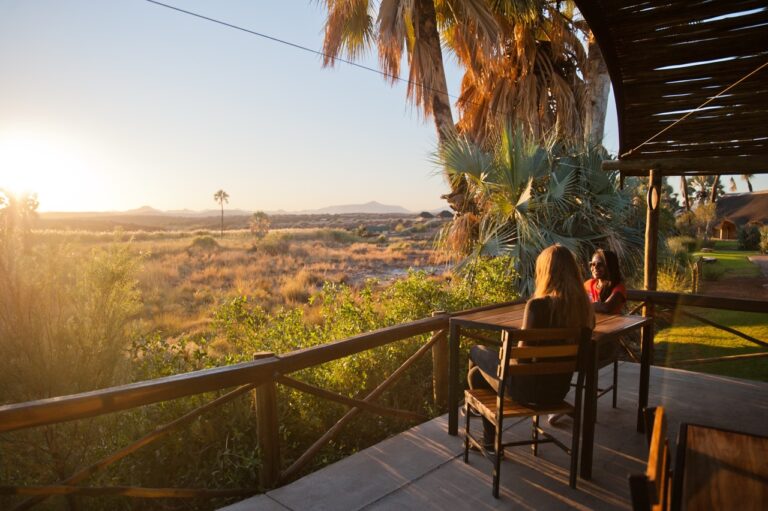
Palmwag Lodge
Palmwag Lodge offers rooms, Camping2Go tents and campsites in Damaraland, with scenic drives, hiking and guided rhino tracking.
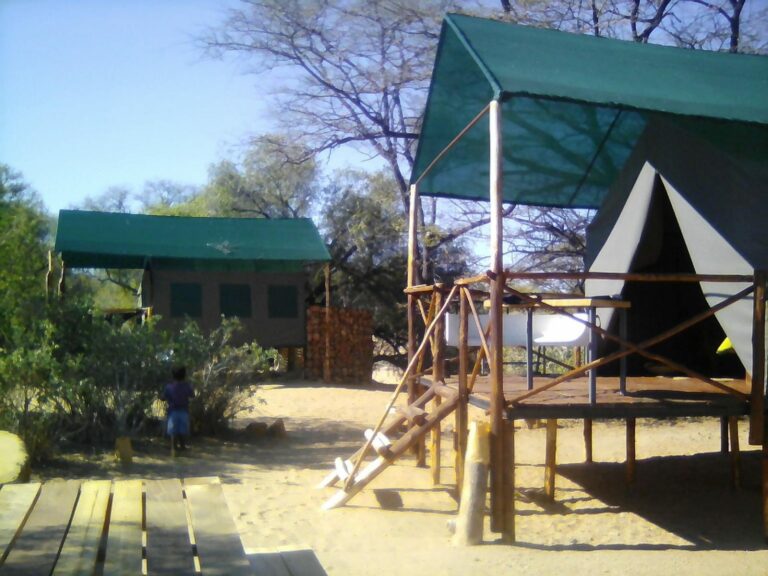
Spitzkoppe Tented Camp and Campsites
Stay at Spitzkoppe Tented Camp, 500 metres outside the mountain reserve, with en-suite bush tents, wagons, simple tents and private campsites.
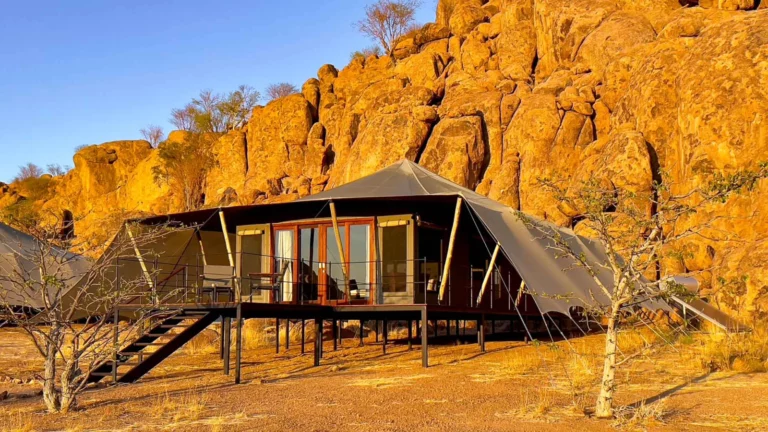
Twyfelfontein Adventure Camp
Twyfelfontein Adventure Camp offers standard and premium tents, pools and dining near the UNESCO rock engravings in Damaraland.